


Synthetic Turf in Atlanta, GA
RI installs ASTM-certified synthetic turf for Atlanta schools, parks, and municipal athletic facilities across the Atlanta metro. Our team manages Georgia EPD Construction Stormwater General Permit requirements and designs sub-base systems engineered for Atlanta’s red clay soils — the most drainage-resistant ground condition in the Southeast.
Why Choose Recreational Industries for Your Atlanta Turf Project?
Over 15 Years of Experience
ASTM-Certified Materials
Affordable Pricing + Professional Installation
Our Synthetic Turf Products for Atlanta
Athletic Field Turf
Engineered for high-traffic play. Engineered for high-traffic play on school and park fields.
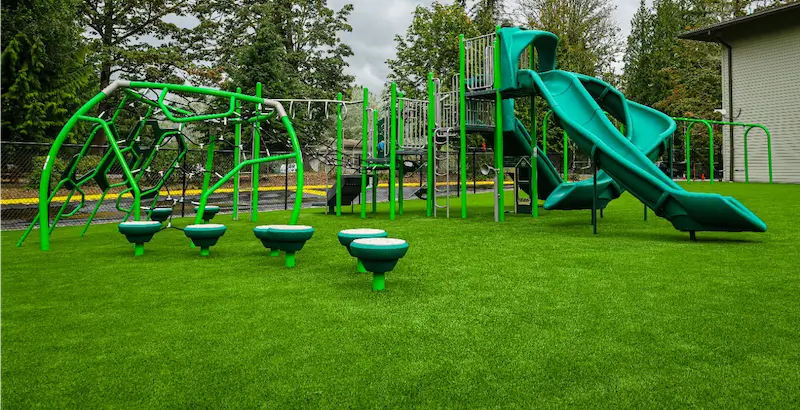
Playground Turf
Slip-resistant, cushioned synthetic turf under play equipment. Slip-resistant, cushioned synthetic turf under play equipment.
Landscape & Commercial Turf
Low-maintenance green for medians, campuses, and commercial properties — no irrigation, no mowing.
Pet Turf
Antimicrobial, odor-resistant backing for dog parks, kennels, and pet-friendly facilities.
Golf & Putting Greens
True-roll synthetic putting surfaces for municipal parks and commercial entertainment facilities.
Specialty Sports Turf
Baseball infields, batting cages, and multi-sport surfaces engineered for performance and durability.
Custom Turf Solutions for Every Atlanta Facility
We design and install synthetic turf systems that serve Atlanta schools, parks, sports complexes, and commercial properties. RI installs nationwide with our own crews — so your project is code-compliant and built to last in Georgia’s climate.
Check out Our Blogs Below to learn more about How We Can Help You
Synthetic Grass Installation Price: What You’ll Really Pay and How to Budget Smart in 2025
Introduction: Why More People Are Switching to Synthetic Grass (and...
Read MoreArtificial Turf Installation Near Me: How to Choose the Best Installer for Your Project
If you’ve been searching for “artificial turf installation near me,”...
Read MoreAstro Turf Lawns Cost: What to Expect and How to Budget for 2025
Thinking about upgrading your yard with artificial grass? You’re not...
Read MoreArtificial Turf Cost Installed: What You Need to Know Before You Buy
If you’re thinking about upgrading your outdoor space, there’s no...
Read MoreLocal Conditions & Requirements in Atlanta, GA
Atlanta’s humid subtropical climate brings 89°F summer highs, UV indices of 8–9, severe thunderstorms from June through August, and approximately 50 inches of annual rainfall. Unlike Florida markets, Atlanta also experiences occasional hard freeze events from December through February, with temperatures dropping below 20°F in severe winters — a freeze-thaw cycle that must be accounted for in backing and infill specification.
The dominant soil type across the Atlanta metro is Cecil clay — a red clay soil with extremely low hydraulic conductivity, with drainage rates often under 0.5 inches per hour. This is the defining drainage challenge for Atlanta synthetic turf installations: water does not move vertically through the native soil at any practical rate. Sub-base systems must be designed for lateral drainage through engineered aggregate layers and perforated pipe networks that carry stormwater to compliant outfalls, not downward into ground that cannot accept it.
Georgia EPD requires a Construction Stormwater General Permit for any land-disturbing activity affecting one or more acres within the Chattahoochee River watershed and other Georgia EPD jurisdictions covering the Atlanta metro. Fulton County and DeKalb County each maintain separate land disturbance permit programs for unincorporated areas. RI coordinates Georgia EPD permit registration, erosion and sediment control plan preparation, and county land disturbance permits as part of standard project delivery for Atlanta-area projects.
Frequently Asked Questions
Atlanta city limits projects are permitted through the City of Atlanta Office of Buildings. Sites in unincorporated Fulton County require Fulton County permits, and unincorporated DeKalb County sites go through DeKalb County. For any project disturbing one or more acres, Georgia EPD Construction Stormwater General Permit registration is required — this state-level permit mandates an approved erosion and sediment control plan and stormwater pollution prevention plan before land disturbance begins. RI installs nationwide with our own crews.
Atlanta’s Cecil clay — the red iron-oxide clay prevalent throughout the metro — has very low hydraulic conductivity, meaning it is effectively impermeable for practical stormwater management purposes. A synthetic turf field in Atlanta cannot rely on vertical infiltration through the sub-base into native soil the way a sandy-soil Florida site can. RI designs Atlanta sub-base systems with engineered aggregate drainage layers, perforated collection pipe networks set at appropriate depth and slope, and controlled outfalls to storm drainage infrastructure. This lateral drainage approach moves water off and away from the field rapidly regardless of what the native clay beneath the sub-base can accept.
All RI turf systems in Atlanta meet applicable shock attenuation standards. Backing systems specified for Atlanta installations are selected for freeze-thaw resistance, as December through February hard freeze events create thermal cycling stress on backing bonds that must be accounted for in material selection. Third-party Gmax testing is conducted prior to field opening on Atlanta-area school and parks projects, and testing results are provided to facility owners as part of project closeout documentation.
Atlanta’s primary synthetic turf lifespan stressors are twofold: summer UV exposure and surface heat loading from June through August, and freeze-thaw cycling from December through February. The backing system must be specified to resist repeated freeze-thaw cycles without delamination. RI selects backing systems with demonstrated freeze-thaw resistance for Atlanta and specifies infill types that do not become rigid under sub-freezing temperatures in ways that could affect shock attenuation during winter use. UV stabilization requirements are moderate compared to Florida markets (UV index 8–9) but still significant. Contact us for specifics on the products and maintenance schedule we recommend for your application.
RI installs multi-sport synthetic turf systems across the Atlanta metro for football, soccer, lacrosse, and field hockey, with NFHS and NCAA-compliant line layouts on shared-use fields. Atlanta’s severe summer thunderstorm pattern makes synthetic turf’s rapid drainage and weather-resistant surfaces particularly valuable for maintaining consistent game and practice schedules through the summer season.
Ready to upgrade a Atlanta facility with low-maintenance synthetic turf?
RI installs nationwide with our own crews — with ASTM-certified materials. We serve the Atlanta area with full project support from first quote to final walkthrough.