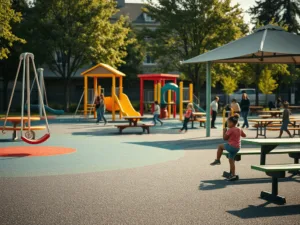

Designing the perfect playground isn’t just about fun—it’s about getting it right for every age group. Whether you’re building for a school, city park, or community center, creating an age-appropriate playground layout is key to keeping kids safe, engaged, and developing physically and socially.
The best playground setup by age supports both motor skills and social skills, offers the right challenges for each age group, and helps maximize your space and budget. But how do you know which playground equipment is right for younger kids, older kids, or even toddlers? Let’s break it down.
Call Us Now to find out which age-appropriate playground is right for your play area!
Playground Design Starts with Understanding the Age Group
Every child develops differently, but grouping play by age helps align with CPSC safety guidelines and developmental milestones. Typically, playgrounds are categorized into:
- Ages 2 to 5: Preschool and toddler ages. Equipment should support fine motor and gross motor skills without being too high or complex. Think crawl tunnels, small slides, and interactive panels.
- Ages 5 to 12: More agile school-age and older children who benefit from climbers, swings, and advanced obstacle features.
- Multi-age zones: If you’re designing for multiple groups, you’ll need to create visual and physical separations for safety and functionality.
Choosing the right playground equipment for each age group can make the difference between a well-used space and one that gets ignored—or worse, causes injuries.
Age-Appropriate Playground Equipment Must Match Development
For Toddlers (Ages 2 to 5)
Younger kids in the 2–5 range are just starting to develop coordination and motor skills. Their world revolves around exploration and pretend play.
What to include:
- Crawl tunnels and ramps for safe exploration
- Low platforms and slides
- Imaginative play panels (e.g., music, games, role play)
- Bucket swings with high backs
- Sensory tables to encourage tactile learning
- Sand and water tables for fine motor development
Avoid anything that encourages jumping or climbing higher than 32 inches—safety and supervision are the priority here.
For Ages 5 to 12
This group thrives on movement, teamwork, and exploration. They need physical challenges that grow with them.
What to include:
- High climbers and net structures for gross motor skills
- Multi-user swings and spinners for teamwork
- Monkey bars and obstacle courses for strength and coordination
- Interactive games that promote social skills
- Zip lines, rope bridges, and rotating equipment for thrill
Older kids need enough challenge to stay engaged—but with appropriate fall protection and clear boundaries from toddler areas.
Designing Playgrounds for Schools vs. Parks

Schools
School playgrounds need structure and control. Recess times mean high volume use in short bursts, so the play area must be durable, low-maintenance, and easy to supervise.
What to focus on:
- Clearly defined age group zones
- Shade structures and seating for staff
- Durable materials that withstand daily wear
- Activities that build social skills and group interaction
Parks
Parks serve a broader public. That means mixed age groups, unpredictable traffic, and a need for versatility.
What to include:
- Separate zones for toddlers, younger kids, and older kids
- Walkways and landscaping to create clear boundaries
- Family-friendly features (benches, water fountains, picnic areas)
- Durable signage showing recommended ages
Still unsure how to start?
👉 Get a free custom quote and layout tailored to your space and age group
Age-Appropriate Playground Equipment: Safety Matters
When building a playground, it’s not just about fun—it’s about keeping kids safe while they grow.
Important safety considerations by age group:
- Surfacing: Ensure proper impact absorption based on height of equipment and user age
- Fall zones: Maintain enough spacing between equipment to prevent collisions
- Supervision visibility: Equipment should be spaced and positioned so adults can keep an eye on all kids
- Transitions: Use clear pathways or landscaping to separate different age areas
- Materials: Choose coatings and finishes that resist heat, rust, and wear
Safety should be baked into every phase of playground design, especially when working with a mix of 2 to 5 and 5 to 12 zones. Following CPSC guidelines will help you stay compliant and create peace of mind for parents and stakeholders.
Smart Layouts for Mixed Age Groups

If you serve more than one age group, you’ll want to design the playground in zones:
Zone 1: 2 to 5-Year-Olds
- Soft surfacing
- Enclosed structures
- Ground-level play equipment
- Pretend play areas like markets or kitchens for imaginative growth
Zone 2: 5 to 12-Year-Olds
- Open layout with climbing towers
- Rotating equipment or obstacle paths
- Social hubs like net domes, balance beams, and partner slides
- High-capacity swings for group interaction
Zone 3: Shared Spaces
- Open grass or rubber areas for running
- Shaded tables for art or lunch breaks
- Fitness trails for community use (not for toddlers)
Looking for a full breakdown of all the moving parts in planning your playground?
👉 Check out the Ultimate Guide to Commercial Playground Equipment
What Happens When Equipment Is Not Age-Appropriate?
Skipping on age-appropriate equipment can backfire fast:
- Safety risks: Toddlers might climb on gear meant for older kids, risking injury
- Disinterest: Older children may get bored on simple structures
- Conflict: Overcrowding or unclear zones cause frustration and accidents
- Wasted budget: Buying the wrong gear now means replacing it sooner
Want your investment to last? Make sure the playground equipment grows with your community. We often recommend future-proofing with modular layouts that let you expand as your needs evolve.
Real-Life Examples: Age-Based Layouts That Work
Small School Example:
- Space: 2,000 sq. ft.
- Zones: Two age-separated clusters
- Equipment: Crawl tunnels and low slides for preschoolers, monkey bars and overheads for school-age kids
Midsize Community Park:
- Space: 6,000 sq. ft.
- Zones: Fully separated with benches in between
- Equipment: Music walls and sand play for younger kids, rope climbers and net domes for older kids
Urban Daycare:
- Space: 1,000 sq. ft.
- Focus: Indoor/outdoor blend
- Equipment: Wall-mounted panels, compact towers, and trike loops
- Designed exclusively for toddlers and preschool ages
You can get the same custom layout—and we’ll help you choose every piece of play equipment based on your community’s real needs.
Related Read: What Makes a Safe and Engaging Play Area for Small Spaces?
Tight on square footage? You’ll love our guide on Small Space Playground Ideas for compact but powerful playground solutions.
Final Thoughts: Your Age-Appropriate Playground Starts Here
Choosing the right age-appropriate playground equipment isn’t just about rules and regulations. It’s about understanding the children ages you serve, meeting them where they are developmentally, and creating a playground they’ll actually use.
When you plan with intention, your play area becomes a space for growth, laughter, learning, and imaginative play. Whether you’re building for toddlers, school-age kids, or the full 2 to 12 spectrum, we’re here to help every step of the way.
✅ Get a custom quote, tailored layout, or talk to a playground planner today.
Let’s build something amazing—together.
Frequently Asked Questions: Age-Appropriate Playground Planning
1. What does “age-appropriate playground equipment” actually mean?
Age-appropriate playground equipment refers to play structures and features designed specifically to match the physical, emotional, and cognitive needs of a particular age group. For example, playgrounds for toddlers (ages 2–5) often feature equipment that’s low to the ground, with simple climbing elements and imaginative play features like playhouses, play panels, or sandbox areas.
Meanwhile, older kids need more challenging equipment like monkey bars, climbing walls, and rotating structures that help build strength, balance, and physical coordination.
2. Why is it important to match playground equipment to each age group?
Matching the right equipment to the specific age group ensures playground safety, developmentally appropriate play activities, and inclusive access. When equipment is best suited to the children’s ages and abilities, it enhances skills and cognitive growth, supports cognitive development, and helps foster both parallel play and cooperative play.
It also helps to reduce the risk of accidents by ensuring that younger kids aren’t using equipment meant for older children, which may be too high or physically demanding.
3. What’s the best layout for playgrounds serving multiple age ranges?
A great solution for multiple age ranges is to design clearly separated zones with age-appropriate equipment in each section. Playground designers often create layouts with physical barriers like landscaping or benches to define play areas for different age groups, ensuring each child has access to appropriate equipment that matches their needs.
This approach supports safe play and maximizes developmental benefits across children of all ages.
4. How can I tell if the equipment is age-appropriate?
When selecting age-appropriate playground equipment, ask these questions:
- Is the equipment designed for a particular age group, such as children ages 2 to 5 or children ages 5 to 12?
- Does it support exploration and fine motor development for younger users?
- Does it offer play elements like slides, panels, and climbers that match the age group’s size and ability?
- Does the design follow Consumer Product Safety Commission (CPSC) guidelines?
Ultimately, equipment must be labeled and rated for a specific age range. Look for certified manufacturers in the commercial playground space who design for playgrounds intended for early childhood and school-age children alike.
5. What types of play experiences should we offer for school-age children (5–12 years)?
Kids ages 5-12 years need more than just swings and slides—they crave variety. You’ll want a range of equipment that encourages:
- Climbing and risk-based play (net towers, rock walls)
- Group-based dramatic play or adventure games
- Imaginative play features like forts, bridges, or interactive games
- Activities that build fine and gross motor skills
- Team interaction through cooperative play zones
This age appropriate playground design helps school-age children build confidence and cognitive skills, all while having fun.
6. How does designing playgrounds for toddlers differ from older age groups?
Toddler playgrounds should be soft, safe, and geared toward discovery. These areas are often filled with features that promote exploration and fine motor development like musical toys, low ramps, sandbox areas, and sensory panels.
Toddlers typically engage in parallel play, where they play near—rather than with—others. That means their space should include smaller-scale play equipment that supports individual play experiences and emotional safety.
In contrast, older kids need more space, higher platforms, and playground equipment for children that encourages risk, challenge, and group interaction.
7. How do I choose the right playground elements for one age group without excluding others?
If you’re only serving one age group, like a preschool or an ages 6 and up zone, you can zero in on age-specific features without clutter. But if you’re aiming to support kids of all ages, you’ll want a custom playground layout with transitional zones that offer equipment for each age group.
A smart design balances inclusive access and age-appropriate zones, ensuring nobody feels left out.
8. Can play equipment also support learning and development?
Absolutely. Many types of playground equipment for children are built to support cognitive development, emotional regulation, and physical skill-building. Activities like imaginative play, dramatic play, climbing, and balancing all contribute to key milestones.
When you use equipment designed with intention, you’re not just creating fun—you’re helping children build fine motor skills, cognitive skills, and social-emotional growth in the real world.
9. What role does the environment play in designing age-appropriate playgrounds?
The environment plays a huge role. When designing playgrounds, think about:
- Visibility for supervision
- Flow between zones for different age groups
- Shading and seating for comfort
- Space for outdoor play and nature-based interaction
Great playground designers also consider how surroundings support play activities—like adding nature trails, sandbox areas, or loose-part play bins near playgrounds intended for early childhood use.
10. What’s the next step if I want to design an age-appropriate playground?
Start by identifying your age range, space, and budget. Then, work with experienced playground designers who understand how to align appropriate equipment with developmental goals, playground safety, and recreational industry standards.
Looking for help designing play that’s safe, inclusive, and fun?
We can help you build a custom playground plan that fits your space, budget, and specific age group needs.