
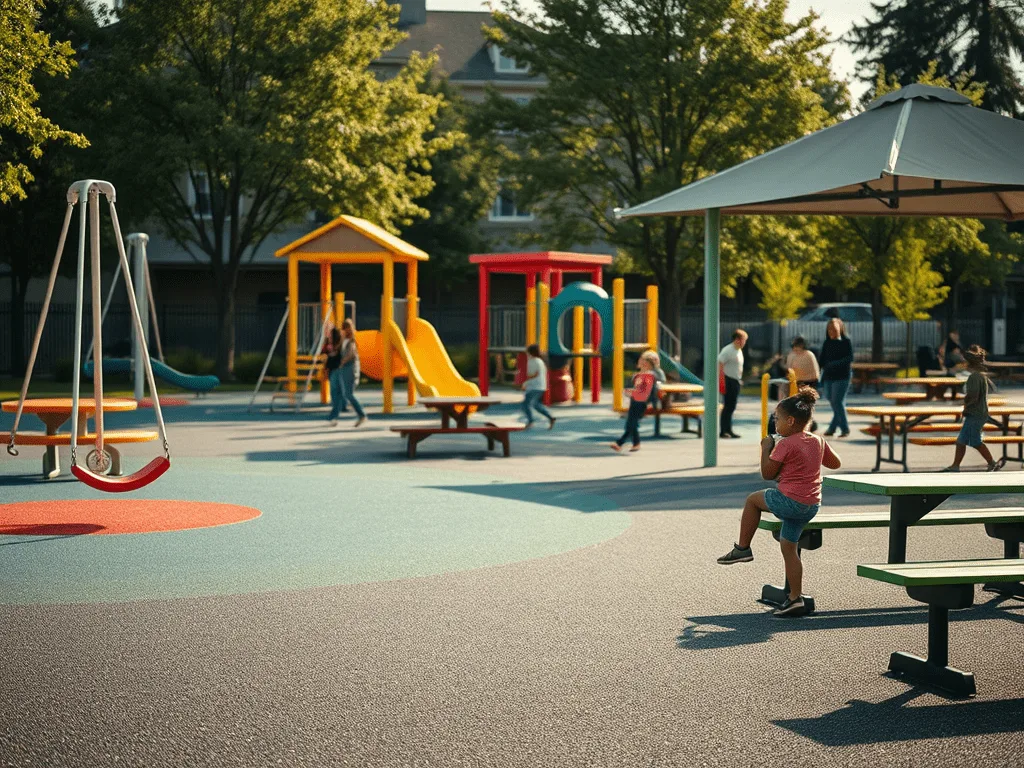
When it comes to building a play space that’s not just fun but actually works for the long haul, understanding your playground surfacing options is key. Whether you’re designing for a school, city park, apartment complex, or church, the material under the equipment can make or break your project—literally and financially.
You can have all the flash—bright colors, tall towers, epic slides—but if the surface isn’t safe, durable, and accessible? You’re going to feel the fallout.
This blog is here to break it all down so you can confidently choose the right surface for your play area, your budget, and the families you serve.
Call Us Today to start planning which playground surfacing will fit your needs.
Why Playground Surfacing Matters More Than You Think
Let’s be honest: most people don’t think twice about what’s on the ground… until something goes wrong.
Here’s the reality: most playground safety incidents involve falls. That’s why your surfacing material matters—a lot. The right surface absorbs impact, complies with safety standards, and supports accessibility for everyone, including children using wheelchairs.
From impact attenuation to drainage and long-term wear, your choice of surfacing affects how safe, usable, and compliant your site really is. And yes, surfaces must meet certain guidelines like those in the Americans with Disabilities Act (ADA)—so if accessibility isn’t built in, you’ll need to redo it later.
A Quick Look at Playground Surfacing Types
Here’s a high-level view of the most common surfaces used in commercial recreation settings today:
- Engineered Wood Fiber (EWF)
- Poured-in-Place Rubber
- Rubber Tiles
- Artificial Turf with Shock Pads
- Loose-fill rubber or pea gravel
Each has its place, its price point, and its pros and cons. (If you’re still planning your overall layout, we highly recommend reading the Ultimate Guide to Commercial Playground Equipment for a full planning breakdown.)
Engineered Wood Fiber: The Classic Starter Option
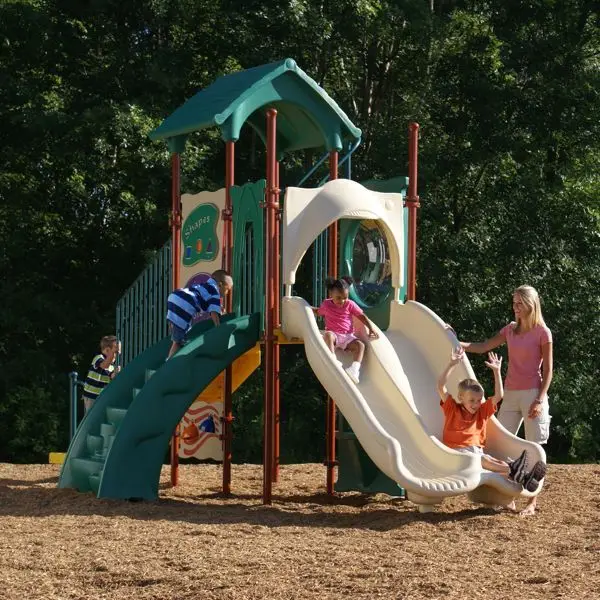
If you’re on a tighter budget but still want compliant safety surfacing, engineered wood mulch is a solid pick. It’s low-cost, blends naturally into outdoor spaces, and cushions falls well when properly maintained.
✅ Good for:
- Schools and churches
- Fast installs with limited funds
⚠️ Watch for:
- Regular raking and topping-off required
- Mulch can shift or get displaced (hello, trenches)
Though it’s a loose-fill option, it’s considered compliant when installed and maintained properly—and it’s a common go-to for first-time projects.
Poured-in-Place Rubber: Sleek, Seamless, Solid
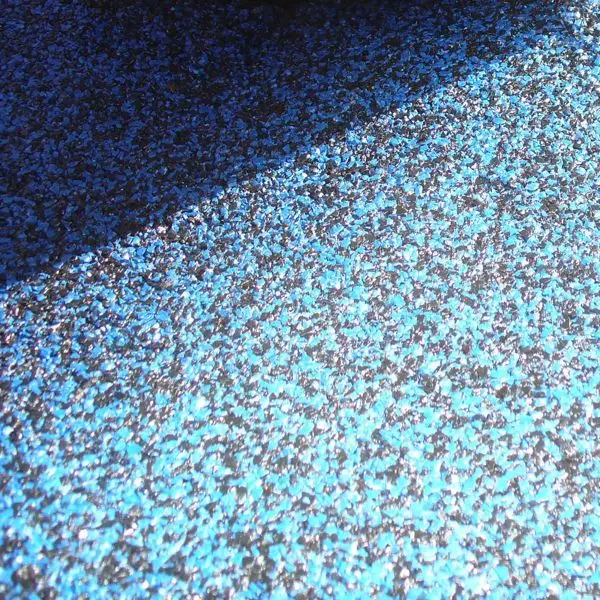
If you’re thinking long-term and want low maintenance, this one’s hard to beat. A unitary surface like poured rubber provides seamless protection, ADA compliance, and can be designed in custom colors and graphics.
It’s ideal for areas with heavy use, and its durability is a major win—especially in high-traffic public parks or inclusive playgrounds.
✅ Best for:
- Municipalities, inclusive schools, and recreation departments
- Long-term use, minimal upkeep
Yes, the upfront cost is higher. But for many teams, the low maintenance and long lifespan make this investment worth it.
Artificial Turf and Rubber Tiles: Stylish + Functional

Want a surface that looks like grass without the mud? Turf can be a great middle ground—especially when paired with shock pads underneath. It feels soft, drains well, and holds up better than you’d expect.
Rubber tiles are another unitary option but with a modular twist. Great for small areas or rooftop play zones, they’re easy to install and even easier to replace if one gets damaged.
✅ Best for:
- Apartment complexes or upscale community play areas
- Indoor or compact footprints
Both turf and tiles often use recycled rubber, which is a sustainability bonus. Just make sure they’re installed correctly to prevent lifting or shifting over time.
Gravel and Loose-Fill Rubber: Niche Picks
You’ll sometimes see pea gravel or rubber mulch used in casual or low-traffic settings. While not ideal for every project, these surfacing materials can work in limited applications—especially when budget is the driving force.
Keep in mind: not all gravel types are ADA-compliant, and some aren’t suitable for fall zones. Always double-check fall height requirements and local codes before using any loose-fill surface.
How to Choose What’s Right for You
Let’s simplify things.
Ask yourself:
- What’s your total budget—upfront and long-term?
- Who’s using the playground—toddlers, teens, all ages?
- Is ADA accessibility required? (It almost always is.)
- How much foot traffic will this surface handle daily?
- Are weather extremes like heat or snow a factor?
Still stuck? Our products on playground equipment by age group can help you understand which surface types match the needs of different users.
And if you’re trying to lock in real numbers, our guide on budgeting for a playground project breaks down where the money goes—and how to spend smarter.
Contact Us Today to get stated!
Why You Shouldn’t DIY This
There’s a big difference between buying a surfacing product and making it work. Things like slope, drainage, and material depth have to be done right—or you risk safety issues, costly repairs, and failed inspections.
This is where a professional installer makes all the difference.
📣 Pro Tip: Work with a team that understands recreational environments.
Recreational Industries specializes in surfacing for schools, parks, churches, and community spaces—we handle it from prep to finish. Call this number so we can help you start planning your dream play area project! 352-234-6894
Let’s Build Something That Lasts
Choosing the right surface is more than just picking what looks good. It’s about building a play area that holds up to wear and weather—and keeps kids safe while they run, climb, and explore.
Still weighing your options? Whether you’re leaning toward turf or tiles, wood fiber or rubber, we’ll help you match your needs with the best-fit solution.
📞 Call us today or request a quote to get expert help from Recreational Industries. No pressure—just clear answers and custom advice.
Final Take: It’s About More Than Surface-Level Thinking
Your playground flooring isn’t just a detail. It’s the foundation for fun, inclusion, and peace of mind. With the right choice, your community gets a safer, more accessible place to play—and you get the confidence that you made the smart call.
Need help picking the best fit for your site?
We’re here for it.
✅ Free quotes
✅ Custom planning
✅ Recreational-grade installation
Let’s bring your vision to life. Together.
FAQ: Choosing the Right Playground Surfacing
1. What’s the most important factor when choosing a playground surface?
When choosing a playground surface, the top priority should always be safety. Look for materials that offer solid impact absorption, meet ASTM standards, and are age-appropriate for your users. Long-term durability, accessibility, and maintenance needs also play a big role in deciding what’s right for your playground.
2. What is poured-in-place rubber, and why is it so popular?
Poured-in-place rubber is a two-layer system that creates a seamless, cushioned playground surface. It’s known for low maintenance, custom color options, and exceptional durability—making it ideal for schools, public playground projects, and inclusive environments.
3. How does rubber surfacing compare to traditional loose-fill materials?
Rubber surfacing like poured rubber surface or rubber mats typically offers better consistency and accessibility compared to loose-fill like mulch or gravel. It doesn’t shift underfoot, stays in place during weather changes, and supports accessibility and safety standards.
4. Are there safe options for both indoor and outdoor playgrounds?
Yes! There are excellent safe options for indoor and outdoor rubber applications. Materials like rubber playground flooring or tiles are designed to handle a variety of conditions, making them versatile and dependable for any playground environment.
5. What makes a playground surface ADA-compliant?
A surface that meets ADA standards ensures access for children with mobility devices. This means choosing surfacing for playgrounds that are firm, stable, and slip-resistant—like poured rubber, turf with shock pads, or rubber playground tiles. ADA compliance ensures safe play for all kids.
6. How do I make sure my playground is built to industry standards?
Working with certified professionals and sticking to industry standards like those from ASTM and CPSC ensures you’re creating a safe playground surface. Everything from installation depth to material type affects compliance, especially for playground safety surfacing.
7. Can rubber playground tiles be used for both new builds and upgrades?
Absolutely. Rubber playground tiles are modular and easy to install, making them a great fit for both new playground builds and retrofits. They’re ideal when you want safety, style, and fast results.
8. What are the benefits of rubber playground flooring in high-traffic areas?
Rubber playground flooring holds up extremely well in high-traffic zones like schools, parks, and community centers. It resists wear, provides consistent safety performance, and can handle years of heavy use without major upkeep.
9. Is there a difference between rubber mats and poured surfaces?
Yes—rubber mats are prefabricated pieces laid down like tiles, while poured rubber surface is installed on-site and molded to fit the space. Both provide cushion and safety, but poured surfaces offer a more seamless, customizable finish.
10. Who should I trust for playground installation?
For professional, code-compliant playground installation, we recommend working with a team that specializes in recreation. Recreational Industries handles everything from site prep to install, making sure your playground is safe, durable, and done right the first time.
11. What’s the best surfacing for a public playground?
For a public playground, look for materials that offer strong rubber safety surfacing, meet ADA requirements, and stand up to high traffic and varying weather. Poured-in-place rubber, turf with shock pads, or tiles are great long-term options.
12. Are there color options available for rubber playground surfaces?
Yes! One of the fun perks of rubber playground materials is that they’re highly customizable. You can choose from a wide range of color options to match your school colors, branding, or just add a little personality to your playground.
13. How do I ensure a safe playground for all ages?
A safe playground starts with matching surfacing to your equipment and age groups. Use appropriate fall height ratings, ensure ADA compliance, and avoid materials that shift or compact over time. That combination helps protect every child during safe play.
14. What role does impact absorption play in safety?
Impact absorption is what helps reduce injuries from falls—one of the biggest concerns in playground safety. Surfaces like poured rubber or engineered turf systems are designed to cushion those falls and provide consistent safety across your entire playground.
15. Can rubber playground surfaces be used for both schools and apartment complexes?
Definitely. Whether it’s a large schoolyard or a compact apartment playground, materials like rubber playground flooring or tiles offer flexibility, safety, and a professional look that elevates any playground setting.


